Cockroach Control Cambridge – German & Gisborne Cockroaches
Got cockroaches? Let's work out what you're dealing with.
Finding a cockroach in your home or business isn't exactly the kind of surprise anyone wants!
The first thing to know is that not all cockroaches in New Zealand are the same. The two types we most commonly deal with around Cambridge and the Waikato are German cockroaches and Gisborne cockroaches (also known as wood cockroaches).
They look different, behave differently and, importantly, need different approaches to control them.
At Focus Pest Solutions, we start by identifying what you're dealing with before deciding on the most appropriate treatment.
German cockroach control
We believe prevention methods and sanitation are the best management for cockroaches. Along with sealing cracks and crevices where pests can enter your home, making sure food preparation areas are clean will help prevent infestation. Likewise, clearing clutter such as newspapers or piles of clothes is also recommended since cockroaches are omnivorous scavengers who will eat just about anything. Because cockroaches reproduce quickly, do-it-yourself cockroach treatments are not recommended. Keeping up good communication with your pest control professional is vital so that further spread and incursion is avoided.
Small cockroaches can mean a big problem!
German cockroaches are one of the main cockroach species we deal with inside homes and businesses.
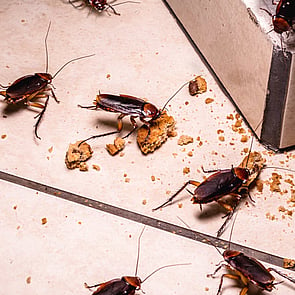
They're relatively small, light brown cockroaches and are commonly found in kitchens, laundries, bathrooms and other warm areas where they have access to food, moisture and shelter.
You may find them:
Around kitchen appliances
Inside cupboards and drawers
Around sinks and plumbing
Behind fridges and dishwashers
Around ovens and other warm appliances
In cracks and crevices
In commercial kitchens and food preparation areas
The tricky thing with German cockroaches is that seeing one doesn't necessarily mean there's only one. They are good at hiding, and populations can build up before you realise there's a problem. That's why simply spraying the cockroach you can see often isn't enough.
How we treat German cockroaches:
German cockroach control is generally about targeted treatment and getting to where the cockroaches are harbouring, rather than covering the entire house in spray.
Depending on the situation, treatment may involve targeted insecticide applications, professional gel baits and other control methods designed to reach cockroaches in their hiding places.
We'll also look at the conditions that are helping them survive — things like food sources, moisture, harbourage and access points.
For businesses, particularly food premises, we can also provide ongoing cockroach monitoring and pest management programmes to help prevent problems from building up again.
Gisborne cockroach control
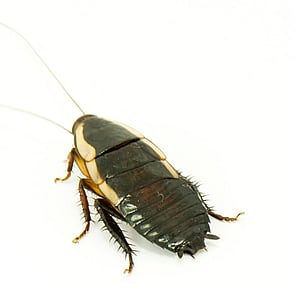
The big dark cockroach you find around the house. Gisborne cockroaches (Drymaplaneta semivitta) are quite different from German cockroaches.
They're larger, darker and generally found outdoors, where they are associated with things such as timber, bark, leaf litter and other organic material.
They can sometimes make their way inside homes, particularly when conditions outside change or when they find an easy way in.
You may find Gisborne cockroaches:
Around gardens and garden edges
Inside BBQ's
In roof spaces over winter
Near wood piles and timber
Around bark or mulch
Under outdoor debris
Around buildings and foundations
In garages, sheds and other outbuildings
Occasionally inside your home
The good news is that finding a Gisborne cockroach inside doesn't necessarily mean you have an indoor infestation. They're quite different from German cockroaches, which can establish themselves indoors.
The key is working out which species you're dealing with.
German cockroach or Gisborne cockroach?
If you're not sure, don't worry — you're certainly not the first person to wonder!
German Cockroach
Size: Small — around 1–1.5 cm
Colour: Light brown/tan
Usually found: Indoors
Common areas: Kitchens, cupboards, appliances, sinks and warm areas
Typical behaviour: Can establish and multiply indoors
Treatment: Targeted indoor treatment and professional baiting
Gisborne Cockroach
Size: Larger — around 2–3 cm
Colour: Dark brown/glossy
Usually found: Outdoors
Common areas: Gardens, timber, bark, mulch and organic debris
Typical behaviour: May wander indoors but usually doesn't establish inside
Treatment: Mainly exterior/perimeter management. Roof space and subfloor treatment.
Still not sure which one you have? Take a look at our identification page below.
The size and where you're finding them can give us a good clue, but correct identification is important because German and Gisborne cockroaches require different treatment approaches.
You can send us a photo or get in touch with Focus Pest Solutions and we can help identify what you're dealing with.
Why are cockroaches getting into my home?
Cockroaches are generally looking for the same basic things we all need — food, water, warmth and somewhere to hide.
For German cockroaches, this often means finding a comfortable spot inside a kitchen or other warm area.
For Gisborne cockroaches, the source is more likely to be outside, with the cockroach finding its way indoors through gaps, doors or other access points.
During an inspection we'll look at the areas around the property that could be contributing to the problem.
That might include:
Food and grease build-up
Moisture and leaks
Gaps around pipes and services
Cracks and crevices
Clutter and harbourage
Areas behind and underneath appliances
Garden debris and timber around the exterior
Gaps around doors and windows
Sometimes a small change around the property can make a surprising difference.
What should I do if I find a cockroach?
First — don't panic!
Try to get a photo if you can. If it's safe to do so, you can also keep the cockroach so we can identify it.
Then have a quick look around the area where you found it.
If you're seeing small cockroaches regularly, particularly in the kitchen, don't wait too long before getting professional advice. German cockroaches can be very good at hiding, and an infestation can be much larger than what you see on the surface.
If you've found a large dark cockroach, particularly around the outside of your home, garden, garage or wood pile, it may be a Gisborne cockroach.
Either way, we're happy to help identify what's going on.
Frequently Asked Questions
How do I know if I have German cockroaches?
German cockroaches are relatively small and light brown, and are commonly found indoors around kitchens, appliances, cupboards and other warm areas. If you're seeing small cockroaches regularly, particularly in the kitchen, it's worth getting them professionally identified.
Are Gisborne cockroaches the same as German cockroaches?
No. They're different species with quite different habits. German cockroaches are small indoor pests that can establish colonies inside buildings. Gisborne cockroaches are larger and are generally found outdoors around timber, bark and other organic material.
Are Gisborne cockroaches wood roaches?
Gisborne cockroaches are often referred to as wood cockroaches or wood roaches, particularly in the pest control industry. The species found in New Zealand is Drymaplaneta semivitta.
I've only seen one cockroach. Should I be worried?
It depends on the species. A single Gisborne cockroach that has wandered inside isn't necessarily a sign of an infestation. However, if you're finding small German cockroaches indoors, particularly more than once, it's worth having the situation assessed.
Can I get rid of cockroaches myself?
There are plenty of supermarket products available, but cockroach control isn't always as simple as killing the ones you can see. German cockroaches can hide in difficult-to-reach areas, so professional treatment can be much more effective when an infestation has become established.
How long does cockroach treatment take?
This depends on the type of cockroach, the size of the infestation and the property. During the initial visit we'll assess what's happening and explain what treatment and follow-up, if any, is recommended. For heavy german cockroach infestations we usually do a follow up treatment to make sure we have them under control.